
Transmission capacity
Grid-Enhancing Technologies (GETs)
More capacity from the grid you already have
Siting and permitting a new transmission line alone can take up to a decade. Grid-enhancing technologies — dynamic line rating, advanced power flow control and topology optimization — add capacity to existing lines, and most can be deployed within one to three years.
This guide explains each technology, the evidence behind them, the regulations asking utilities to consider them, and where real-time line monitoring fits.
What are grid-enhancing technologies?
Grid-enhancing technologies (GETs) are hardware and software that increase the capacity, efficiency and reliability of the existing transmission system without building new lines. The three core GETs are dynamic line ratings (DLR), which reveal how much a line can really carry; advanced power flow control (APFC), which steers power toward underused lines; and topology optimization, which reconfigures the network to route around congestion.
You will also see related terms. Advanced transmission technologies (ATTs) is a broader umbrella that adds physical upgrades such as advanced conductors and reconductoring. In Europe the same tools are often called grid optimising technologies, and in planning circles they are grouped with non-wires alternatives.
Why grid-enhancing technologies matter now
Three pressures are converging on transmission systems:
- Rising demand. As of December 2023, NERC projected 91 GW of peak demand growth over the following decade, driven by data centers, electrification and new industrial load.
- Long interconnection queues. At the end of 2025, about 2,061 GW of generation and storage was actively seeking connection to the U.S. grid, according to Lawrence Berkeley National Laboratory. Only 13% of the capacity requested from 2000 to 2020 had reached commercial operation, and in regions with data the path to operation takes more than five years.
- Slow new construction. DOE notes that siting and permitting a transmission line can take up to 10 years, while most advanced grid solutions can be deployed within one to three years.
GETs do not replace the need for new transmission. They are the fastest way to use what already exists, relieve congestion while new lines are permitted, and make sure new investment goes where it is genuinely needed.
The main types of grid-enhancing technologies
Dynamic line ratings (DLR)
Sensors and software calculate a line's real-time thermal capacity from actual wind, temperature, solar radiation and conductor state, instead of a fixed worst-case rating. DOE reports an average 10–30% increase in effective capacity. Read the full DLR guide →
Ambient-adjusted ratings (AAR)
A simpler step that updates ratings at least hourly using forecast air temperature and day/night solar conditions. Required by FERC Order No. 881, but it keeps a conservative fixed wind assumption, so it captures only part of the available headroom.
Advanced power flow control (APFC)
Devices that push or pull power between parallel paths, shifting flow off overloaded lines and onto lines with spare capacity, so the whole corridor is used more evenly.
Topology optimization
Software that finds better network configurations — which breakers to open or close — to route power around congestion using equipment the utility already owns.
Advanced conductors
Higher-capacity wire, often with composite cores, strung on existing towers. Not a GET in the strict sense, but part of the advanced transmission technology toolbox regulators now ask utilities to consider.
Real-time line monitoring
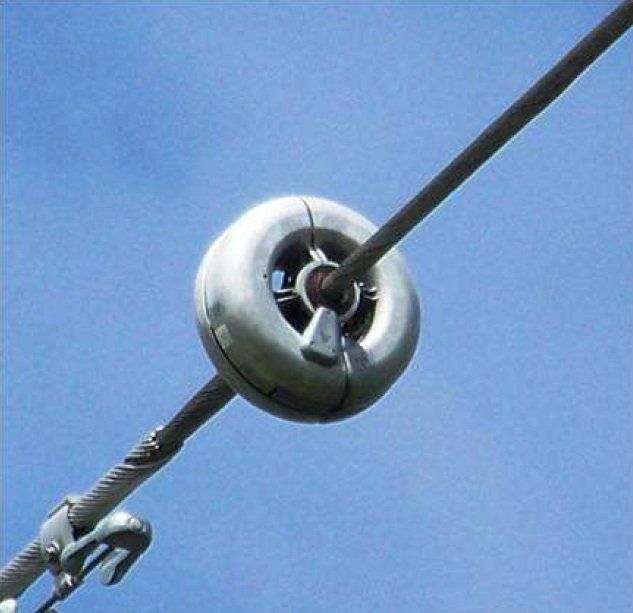
Clamp-on sensors that measure conductor temperature, current, voltage and sag. This measured data underpins direct DLR and gives every other GET an accurate picture of what lines can carry. See the PowerDonut® →
Grid-enhancing technologies compared
| Technology | What it changes | Main benefit | Typical deployment | FERC Order 1920 consideration |
|---|---|---|---|---|
| Dynamic line ratings | The rating (limit) of a line | More capacity on thermally constrained lines; situational awareness | 1–3 years, including integration into operations | Yes |
| Advanced power flow control | How power divides across parallel paths | Uses spare capacity on underloaded lines | Months to a few years | Yes |
| Transmission switching / topology optimization | Network configuration | Low-cost congestion relief with existing breakers | Software rollout plus operator procedures | Yes |
| Advanced conductors | The physical wire | Permanent capacity increase on existing towers | Construction project, shorter than a new line | Yes |
How GETs work together
DLR raises the ceiling on individual lines. Power flow control and topology optimization move power onto the lines that have room. Deployed across a region, the gains add up: RMI's 2024 study of PJM, conducted with Quanta Technology, evaluated 95 GETs projects and found they could bring 6.6 GW of new clean energy onto the grid and save about $1 billion a year in production costs.
Benefits of GETs: what the evidence shows
- System-wide capacity. DOE's 2024 Pathways to Commercial Liftoff: Innovative Grid Deployment found that advanced grid solutions could let the existing grid support 20–100 GW of additional peak demand, and that most cost less than a quarter of conventional alternatives.
- Interconnection. In PJM, RMI's study found that GETs could enable 6.6 GW of new clean energy and about $1 billion a year in production cost savings.
- Congestion savings. PPL Electric reports that after it began streaming dynamic ratings to PJM in October 2022, congestion costs on its Juniata–Cumberland 230 kV line fell from more than $60 million in winter 2021–22 to about $1.6 million in winter 2022–23. See more DLR field results.
- Curtailment and ratepayer value. A DOE Office of Electricity case study of the New York (NYISO) system modeled a 2025 scenario: DLR alone avoided about $1.7 million a year in curtailed energy value, and DLR with power flow control and one new substation saved about $9.1 million, compared with $13.6 million for a conventional set of upgrades that would take years to build.
Modeled studies show potential, not guaranteed outcomes. Actual value depends on which constraints bind, how often, and whether operators and markets can use the extra capacity. A screening study on your own constraints is the honest starting point.
GETs policy and regulation
Federal (FERC)
- Order No. 881 (2021) requires ambient-adjusted ratings for near-term transmission service and requires RTOs/ISOs to be able to accept dynamic ratings. Deadlines were extended for several operators: PJM became the first RTO to implement AAR on March 4, 2026, while MISO and NYISO have until no later than December 31, 2028.
- Order No. 1920 (2024) requires transmission providers to consider more fully dynamic line ratings, advanced power flow control, advanced conductors and transmission switching in long-term regional transmission planning. Order No. 1920-A (November 2024) left that requirement in place.
- DLR rulemaking (RM24-6). FERC issued an advance notice of proposed rulemaking on dynamic line ratings in 2024. As of its August 2026 regulatory agenda, no proposed or final rule had been issued.
States
States are moving faster than federal rules. As of March 2026, 16 states had some form of advanced transmission technology requirement. In May 2026 Colorado enacted HB 1081, which directs its Public Utilities Commission to require Public Service Co. of Colorado (Xcel Energy), Black Hills Energy and Tri-State to analyze these technologies in their 10-year transmission plans. In the second quarter of 2026, the North Carolina Utilities Commission approved dynamic line rating prototypes.
State policy changes quickly. Confirm current requirements with your public utility commission.
International
The EU Action Plan for Grids (November 2023) makes better use of existing grids one of its core challenges, names dynamic line rating among the innovative solutions for network efficiency, and asks ENTSO-E and the EU DSO Entity to raise awareness of grid-efficiency technologies. In Latin America, Brazil's energy planning agency EPE has recommended DLR for a 138 kV line in São Paulo state, raising its limit by about 20% and deferring a rebuild of roughly R$140 million.
A practical GETs roadmap for utilities
- Map your constraints. Identify the lines and flowgates that bind most often and what each costs in congestion, curtailment or delayed interconnection.
- Classify the limit. Thermal limits point to DLR or reconductoring; flow-split problems point to power flow control; network-wide congestion points to topology optimization.
- Start with measurement. Instrument critical spans with line sensors and weather stations to establish real conductor behavior before changing ratings.
- Pilot and integrate. Run a pilot on one or two corridors, integrate results into EMS/SCADA, and document the method for regulators.
- Feed planning. Use measured results in Order No. 1920 and state planning evaluations to compare GETs against traditional upgrades.
- Scale. Extend to the next constraints, and combine technologies where they compound.
Where Atecnum fits: the monitoring layer for GETs
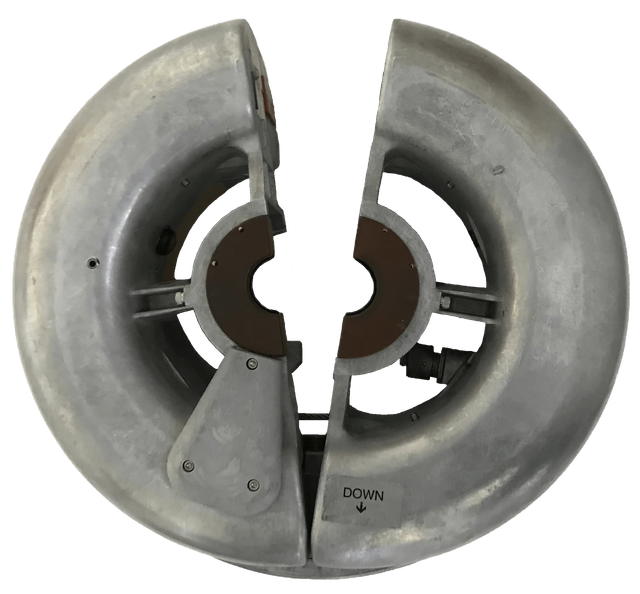
Atecnum manufactures the PowerDonut® PD4, a self-powered, clamp-on sensor for overhead lines up to 765 kV, and the PDS20 software that turns its data into dynamic line ratings, sag and tension calculations, alarms and EMS/SCADA feeds.
The PowerDonut® measures current, voltage, conductor temperature and inclination, with optional harmonics and fault waveform capture. That gives utilities the measured conductor data needed for direct DLR — and an accurate view of line limits for any power flow control or topology optimization program.
Proudly made in the U.S.A., with a design lineage going back to the 1980s.
Grid-enhancing technologies FAQ
What are grid-enhancing technologies (GETs)?
Grid-enhancing technologies are hardware and software that increase the capacity, efficiency and reliability of the existing transmission system without building new lines. The core GETs are dynamic line ratings, advanced power flow control and topology optimization (transmission switching).
What is the difference between GETs and advanced transmission technologies (ATTs)?
Advanced transmission technologies is a broader umbrella that includes GETs plus physical upgrades such as advanced conductors and reconductoring. GETs focus on operating existing lines more intelligently; advanced conductors replace the wire itself to raise its capacity.
How much capacity can GETs add to the grid?
The U.S. Department of Energy estimated in 2024 that advanced grid solutions, including GETs, could let the existing grid support 20 to 100 GW of additional peak demand. In PJM, an RMI study found that GETs could bring 6.6 GW of new clean energy onto the grid and save about $1 billion a year in production costs.
Does FERC require utilities to use grid-enhancing technologies?
FERC Order No. 1920 requires transmission providers to consider more fully dynamic line ratings, advanced power flow control, advanced conductors and transmission switching in long-term regional transmission planning, and Order No. 1920-A kept that requirement. Order No. 881 requires ambient-adjusted line ratings. A dedicated DLR rule has not yet been proposed.
Which states have grid-enhancing technology laws?
As of March 2026, 16 U.S. states had some form of advanced transmission technology requirement. Colorado added one in May 2026, requiring its major utilities to analyze these technologies in their transmission plans. Policies change frequently, so check your state commission for current requirements.
Where does line monitoring fit among GETs?
Real-time line monitoring is the data layer for GETs. Sensors such as the PowerDonut® measure conductor temperature, current and sag, which are needed for direct dynamic line ratings and also give power flow control and topology optimization tools an accurate view of line limits.
Start with the data your grid is missing
Tell us about your constrained corridors. We'll help you scope a monitoring and DLR pilot that supports your GETs evaluation.
Related resources
Sources
- Lawrence Berkeley National Laboratory, Queued Up: 2026 Edition(data through 2025).
- RMI, RMI Study Reveals Large Opportunity for Clean Energy and Customer Savings in PJM by Deploying GETs(February 2024).
- U.S. DOE Office of Electricity, Grid-Enhancing Technologies: A Case Study on Ratepayer Impact(2022).
- E. Rosenberger, PPL Electric Utilities, PPL Electric's Dynamic Line Ratings (DLR), Energy Association of Pennsylvania conference (October 2024).
- FERC, Order No. 881 news release(2021).
- PJM Inside Lines, PJM Becomes First RTO to Implement Ambient-Air Ratings Under FERC Order 881(March 2026).
- FERC, Order granting MISO extension of time under Order No. 881(2025).
- FERC, Order granting NYISO extension of time, Docket ER22-2350(March 2024).
- Federal Register, Order No. 1920-A, Building for the Future Through Electric Regional Transmission Planning and Cost Allocation(December 2024).
- Federal Register, Implementation of Dynamic Line Ratings (ANOPR, RM24-6)(July 2024).
- Federal Register, FERC Unified Regulatory Agenda(August 2026).
- Utility Dive, Colorado advanced transmission technology bill (HB 1081)(April–May 2026).
- European Commission, EU Action Plan for Grids, COM(2023) 757(November 2023).
- Canal Solar, EPE recommends DLR to expand transmission in São Paulo.
- Atecnum, PowerDonut® PD4 and PDS20 Software product specifications.
